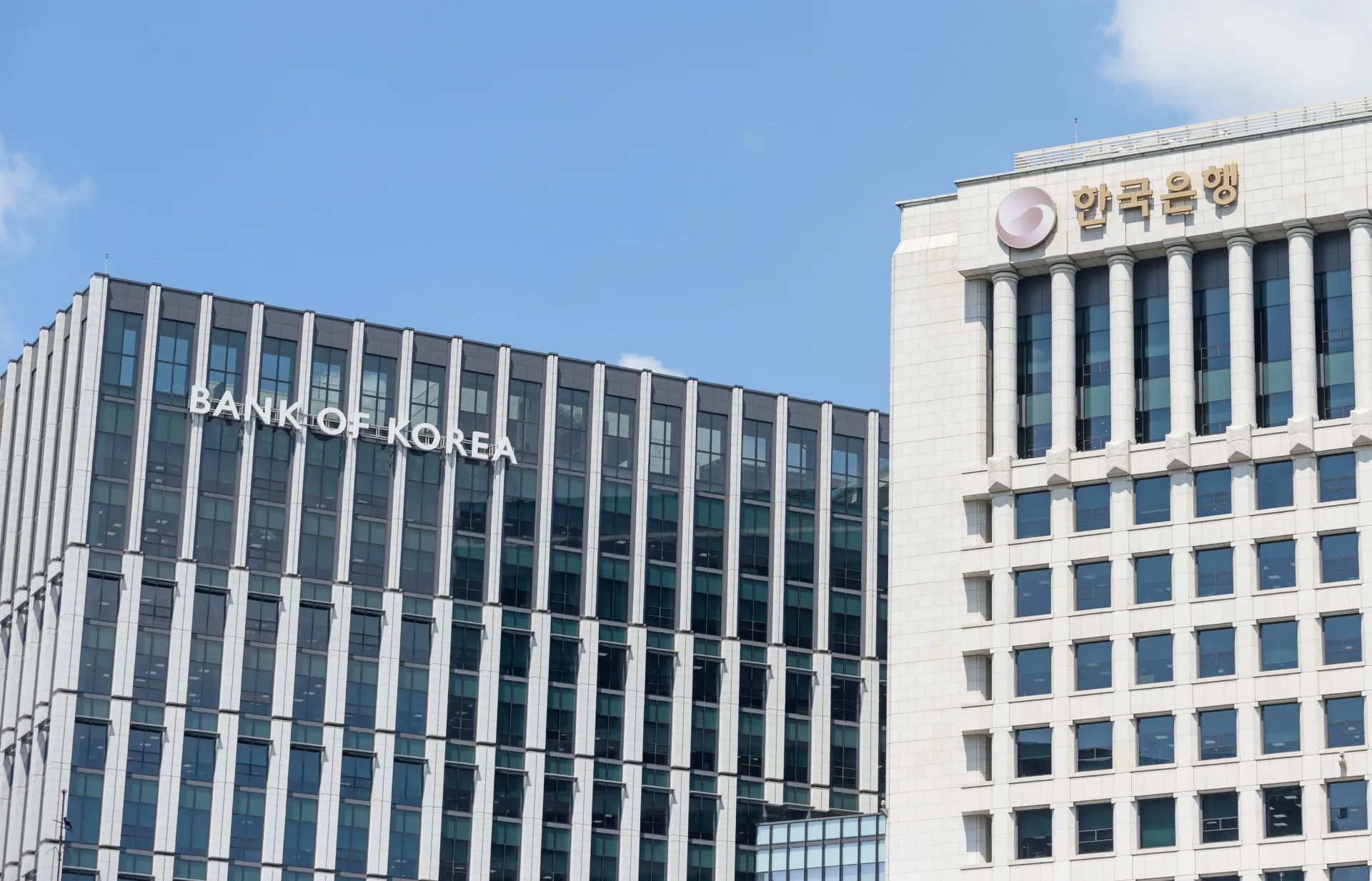
The Bank of Korea hiked its benchmark rate by 25 basis points to 2.75% — the first increase since January 2023 — citing higher consumer prices and currency pressures that could lift inflationary risks.
South Korea’s central bank raised its policy rate by 25 basis points to 2.75%, marking the first tightening move since January 2023 as headline inflation accelerates and the won has shown notable weakness. The Bank of Korea (BOK) said the increase was in line with median economist estimates and reflects upward pressures on prices and wages.
What the decision was and why it matters
The BOK raised its benchmark rate by 0.25 percentage point to 2.75%, matching the median forecast from economists polled by Reuters. The hike responds to rising consumer prices: headline inflation in June climbed to 3.2%, the highest level since 2023. The central bank also flagged wage pressures after large performance bonuses at some major IT companies, saying those payouts could spill into broader pay growth and add to inflationary momentum.
Market and currency context
South Korea has experienced a period of won depreciation; the currency reached a 17-year low near 1,561.5 per dollar on June 5 and touched around 1,559 earlier in the month, according to the source. Recent statements attributed to BOK Governor Shin Hyun Song in testimony to parliament suggested “ample room for the won to strengthen going forward” and noted a large current account surplus being accumulated, which could support currency gains. Higher policy rates tend to attract foreign inflows and can bolster the currency, a channel the BOK’s move reinforces.
Economic backdrop
The BOK also has scope to tighten because South Korea’s economy expanded strongly in the first quarter, with growth of 3.8% — the fastest pace since late 2021, the source reported. That growth, combined with rising inflation and potential wage pass-through from IT-sector bonuses, formed part of the central bank’s rationale for moving now.
Market reaction and equity volatility
The rate decision comes amid elevated volatility in South Korean equities, driven largely by swings in major semiconductor names. The benchmark Kospi (KS11) has seen sharp moves; a recent session included a more than 6% decline tied to heavy losses in chipmakers such as Samsung Electronics and SK Hynix. The BOK’s announcement and underlying inflation and currency developments are likely to remain focal points for investors assessing flows into the market and corporate cost pressures.
Key quotes from central bank commentary
The source reports the BOK highlighted that large performance bonuses in the IT sector could translate into broader wage increases, adding upward pressure to inflation. Governor Shin Hyun Song reportedly told lawmakers there is “ample room for the won to strengthen going forward,” and noted the accumulation of a very large current account surplus.
Why it matters for traders and investors
The rate hike signals a shift from a prolonged pause and tightens monetary conditions, which can affect bond yields, currency flows and valuations for interest-rate-sensitive sectors. Investors tracking South Korea should watch inflation data, wage developments, won moves (KRW=) and volatility in chip-sector names that have driven swings in the Kospi (KS11).
What’s next
Market participants will monitor forthcoming inflation releases, corporate wage announcements and BOK communications for guidance on whether further tightening is likely. The central bank’s references to currency strength and the current account surplus indicate policymakers see external balances as part of the transmission mechanism for monetary policy.
Bottom Line for Traders
The BOK’s 25 basis-point hike to 2.75% closes a multi-year pause and reflects concerns about rising inflation and wage pressures. Traders should track inflation prints, won exchange-rate developments, and earnings or bonus announcements in technology firms that could affect domestic wage trends and market volatility.
$KS11 Live Price, Interactive Charts and Performance Graphs
Market data may be delayed. See StockMarketLoop’s financial disclaimer.