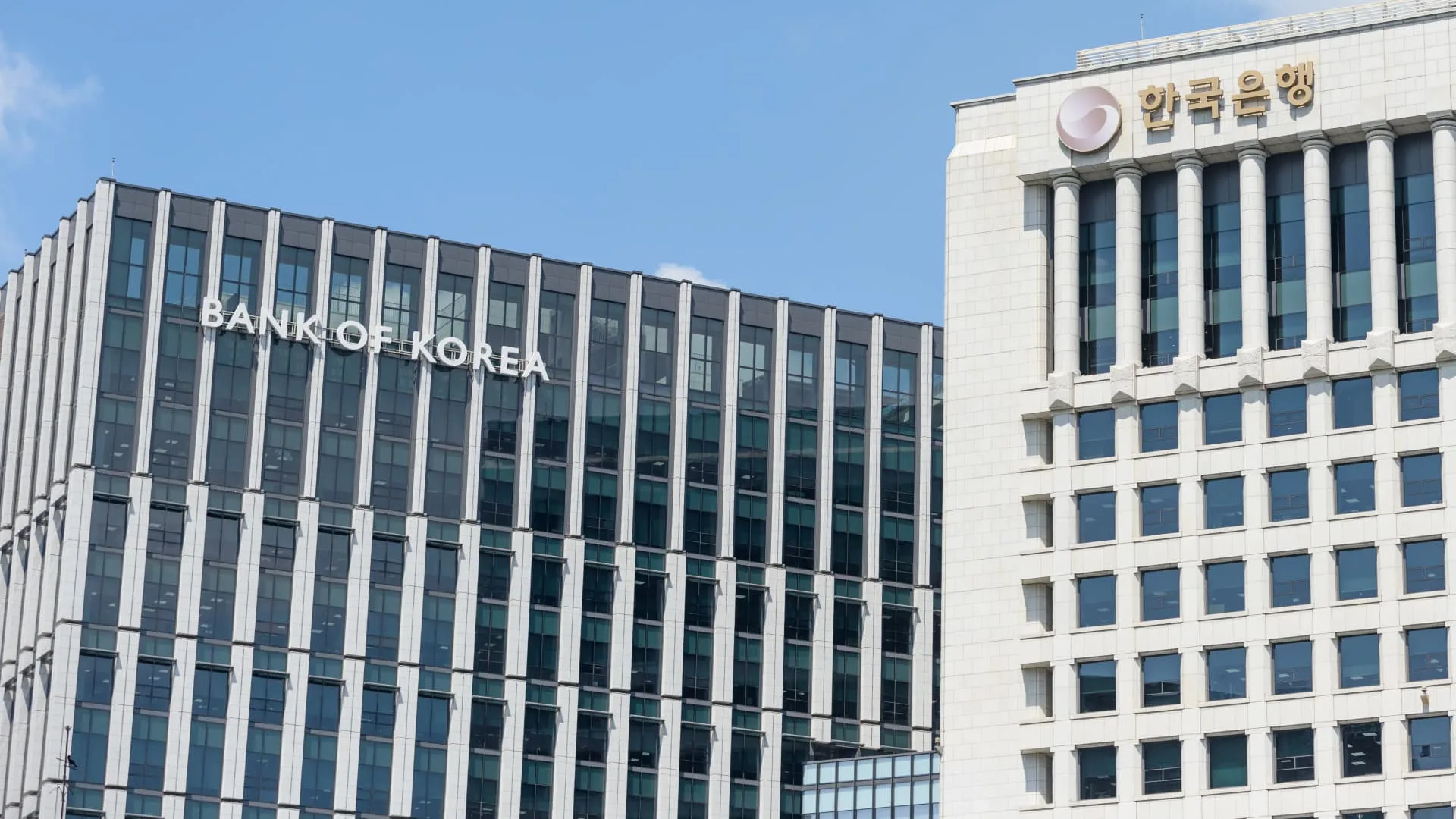
The Bank of Korea increased its policy rate by 25 basis points to 2.75%, citing elevated inflation and energy-driven price pressures; officials flagged exchange-rate and wage risks amid strong growth and market volatility.
The Bank of Korea (BOK) raised its benchmark policy rate by 25 basis points to 2.75% — the central bank’s first hike since January 2023 — as headline inflation climbed and risks to price stability mounted. The move matched median economist forecasts and underscores the BOK’s view that inflation will stay above its 2% target “for a considerable time.”
What the decision said and why it matters
- The BOK cited rising consumer prices and the lagged impact of higher energy costs as drivers keeping inflation elevated. Headline inflation in June reached 3.2%, the highest level since 2023, according to government data referenced by the central bank.
- The bank warned of uncertainty from exchange-rate swings, the pace of domestic demand recovery, and upward wage pressure. It projected headline inflation for 2026 at 2.7% and said core inflation would be “somewhat higher” than a previous 2.4% forecast.
- The central bank also highlighted recent large performance bonuses in the IT sector as a potential source of broader wage gains and inflationary pressure.
Market context — currency, growth and equities
- The won (KRW) had depreciated earlier in the summer, touching a 17-year low of 1,561.5 to the dollar on June 5 and nearing that level again before strengthening. The article reports the won was trading around 1,484.86 against the dollar at a later point noted by the source.
- BOK Governor Shin Hyun Song told parliament there is “ample room for the won to strengthen going forward” and referenced a “very large current account surplus” as supporting factors.
- South Korea’s economy posted strong growth in the first quarter — 3.8% — the fastest since late 2021, providing scope for tighter monetary policy without derailing activity, according to the central bank’s assessment.
Market reaction and equity volatility
- The rate hike comes amid heightened market turbulence, particularly in semiconductor names. Swings in Samsung Electronics and SK Hynix contributed to a sharp drop in the benchmark Kospi index, which tumbled over 6% as major chipmakers plunged following U.S. losses in the sector.
- Higher interest rates can attract foreign capital and support currencies, a mechanism the BOK noted when discussing the potential for further monetary tightening.
Economist read — further tightening possible
- Gareth Leather, senior Asia economist at Capital Economics, said further tightening appears likely. He argued inflation is likely to remain above target for the rest of the year while growth stays robust.
- Leather pointed to exceptionally strong export performance — a 71% year-on-year rise in dollar terms for June, the fastest since 1978 — as evidence the economy can withstand higher rates. He did flag falling real retail sales as a concern but still projected above-consensus growth for the year.
What’s next
The BOK’s statement and domestic data indicate a higher-for-longer inflation scenario, with policymakers watching exchange rates, wage dynamics, and energy costs. The central bank’s projections and referenced risks suggest additional rate moves remain on the table if inflationary pressures persist.
Key quotes
- On inflation persistence: the BOK said “Inflation is projected to remain elevated for some time as the impact of the rise in energy prices feeds through with a time lag.”
- On currency prospects: Governor Shin Hyun Song said there was “ample room for the won to strengthen going forward” and noted a “very large current account surplus.”
Bottom line for traders
The BOK’s 25bp hike to 2.75% signals a shift toward tighter policy in response to elevated inflation and energy-driven price pressures. Traders should note the central bank’s explicit concerns about exchange-rate volatility, wage costs, and robust export- and GDP-led growth, all factors that could influence future policy decisions and volatility in equities — particularly semiconductor stocks named in the source.