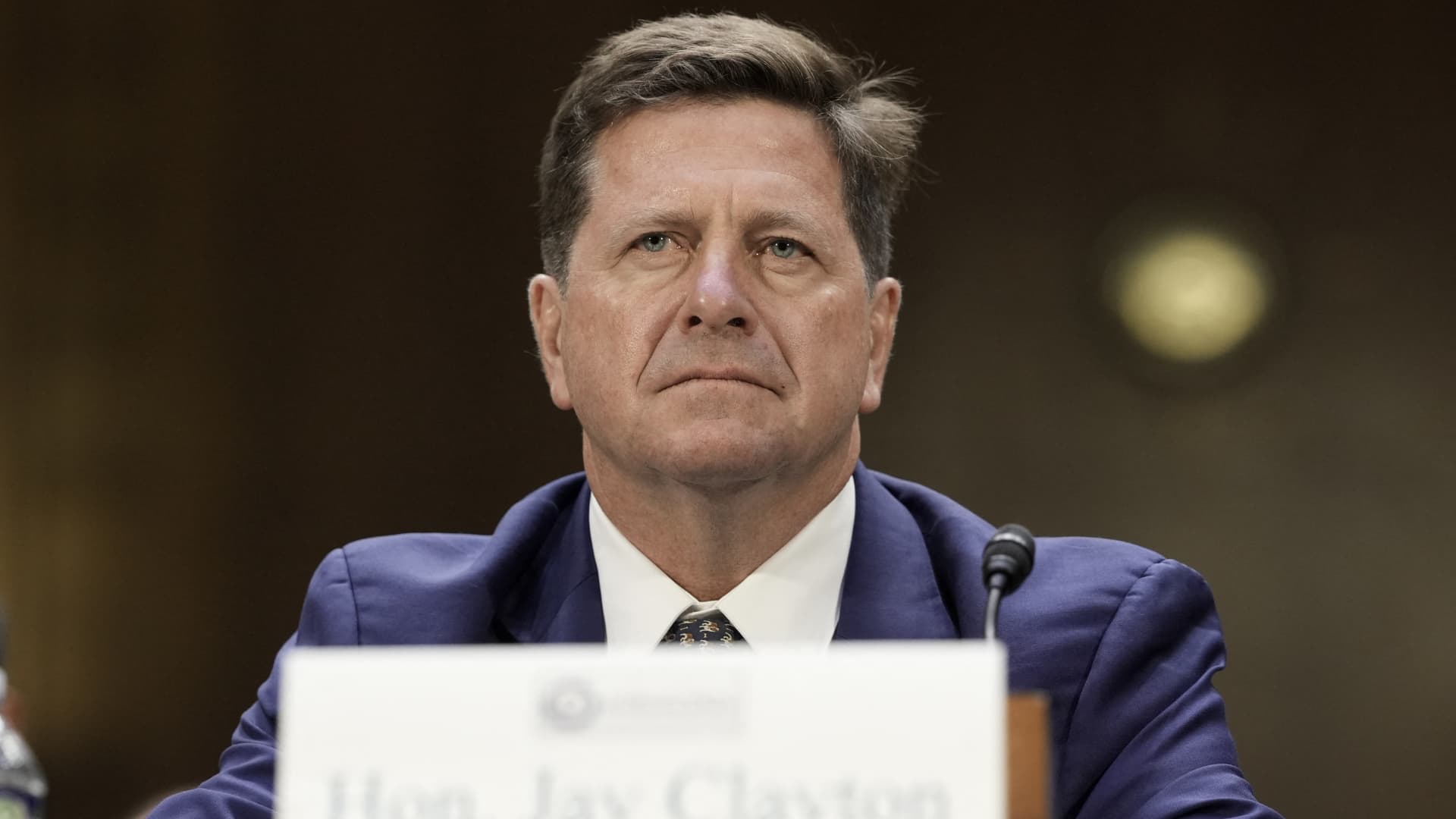
Jay Clayton, President Donald Trump’s pick for director of national intelligence, faced pointed questioning from Senate Democrats over his 2020 election remarks, subpoenas of New York Times reporters and his knowledge of Tulsi Gabbard’s role in a Georgia election-office raid.
Jay Clayton, the former Securities and Exchange Commission chair and current U.S. attorney for the Southern District of New York, declined on Wednesday to directly say that Joe Biden won the 2020 presidential election during his Senate Select Committee on Intelligence confirmation hearing to be director of national intelligence (DNI). Clayton also defended subpoenas issued to New York Times reporters and said he only recently learned of his predecessor Tulsi Gabbard’s reported involvement in a raid at a Georgia election office.
Why It Matters
The DNI oversees 18 intelligence agencies and has access to highly classified information. Clayton’s inability or unwillingness to clearly address the outcome of the 2020 election and related election-integrity questions drew sustained criticism from Democrats on the committee and injects controversy into a nomination that still appears likely to advance in a Republican-controlled Senate.
Market Reaction
The article’s source does not provide stock-market or price-action data. No tickers are associated with the nomination in the source.
Hearing highlights
- Clayton repeatedly avoided a plain affirmative when asked who won the 2020 election. He said, “I am not an election denier. Joe Biden was certified,” but declined to restate that Biden won.
- Sen. Jon Ossoff (D‑Ga.) pressed Clayton on whether he knew Tulsi Gabbard had participated in the execution of a search warrant at a Fulton County, Georgia, election office earlier this year. Clayton said he only learned of Gabbard’s reported involvement during a private meeting with Ossoff earlier in the week.
- Sen. Angus King (I‑Maine) questioned Clayton about prior remarks on “Squawk Box” in which Clayton said the U.S. has “a deep problem with voting” and that “we’re doing an absolutely terrible job” on the integrity side; Clayton clarified those comments as concerns over audit trails and processes in some jurisdictions.
- Sens. Michael Bennet (D‑Colo.) and Kirsten Gillibrand (D‑N.Y.) challenged Clayton over subpoenas served to New York Times reporters after their reporting on security issues tied to an Air Force One gifted to the president by Qatar. Clayton confirmed subpoenas were issued and said he could not discuss specifics of the investigation but expressed confidence in procedures that protect the First Amendment.
Context & Background
Clayton’s nomination followed the May resignation of then‑DNI Tulsi Gabbard. Bill Pulte was named interim DNI in late May and has since conducted a sweep of senior intelligence officials at President Trump’s direction, prompting bipartisan concern.
Clayton’s confirmation process was initially scheduled for June but was paused after President Trump publicly directed Clayton not to appear that morning via TruthSocial, citing stalled negotiations over attaching a controversial election bill to the renewal of Section 702 of the Foreign Intelligence Surveillance Act.
Negotiations over Section 702 subsequently failed and the foreign-surveillance program lapsed in June, a development noted by the committee and tied in reporting to reactions over Pulte’s interim appointment.
Why it matters for governance and oversight
The DNI post controls access to the nation’s most sensitive intelligence and shapes interagency priorities. Senators on the committee underscored the unusual path of this nomination—public pauses, an interim appointee who moved aggressively to remove officials, and public questions about the nominee’s views on election integrity and press subpoenas—raising concerns about oversight, independence and the intelligence community’s operational stability.
Key Quotes
- Sen. Mark Warner (D‑Va.), committee vice chair: “I can’t think of any other instance in history of this committee where a president sends a nominee up, and then in a bipartisan way, we say we really want to move heaven and earth to get this nominee moving quickly because of the importance of the position, and then the president decided that the Senate was moving too fast on his own nominee, and holds that nominee.”
- Clayton on the subpoenas: “Let me say that I am confident that the procedures that we have in place to protect the First Amendment and protect the freedom of the press, and not result in intimidation of journalists.”
What’s Next
The committee is expected to vote on Clayton’s nomination next week. If the committee advances the nomination, the full Senate will decide whether to confirm Clayton as DNI.
Bottom Line for Traders
The article provides no market data or direct economic implications tied to the nomination. For market participants monitoring governance and geopolitical risk, the Senate’s handling of a DNI nominee who will control sensitive intelligence may be relevant to sector and policy risk assessments, but the source supplies no specific market reaction.