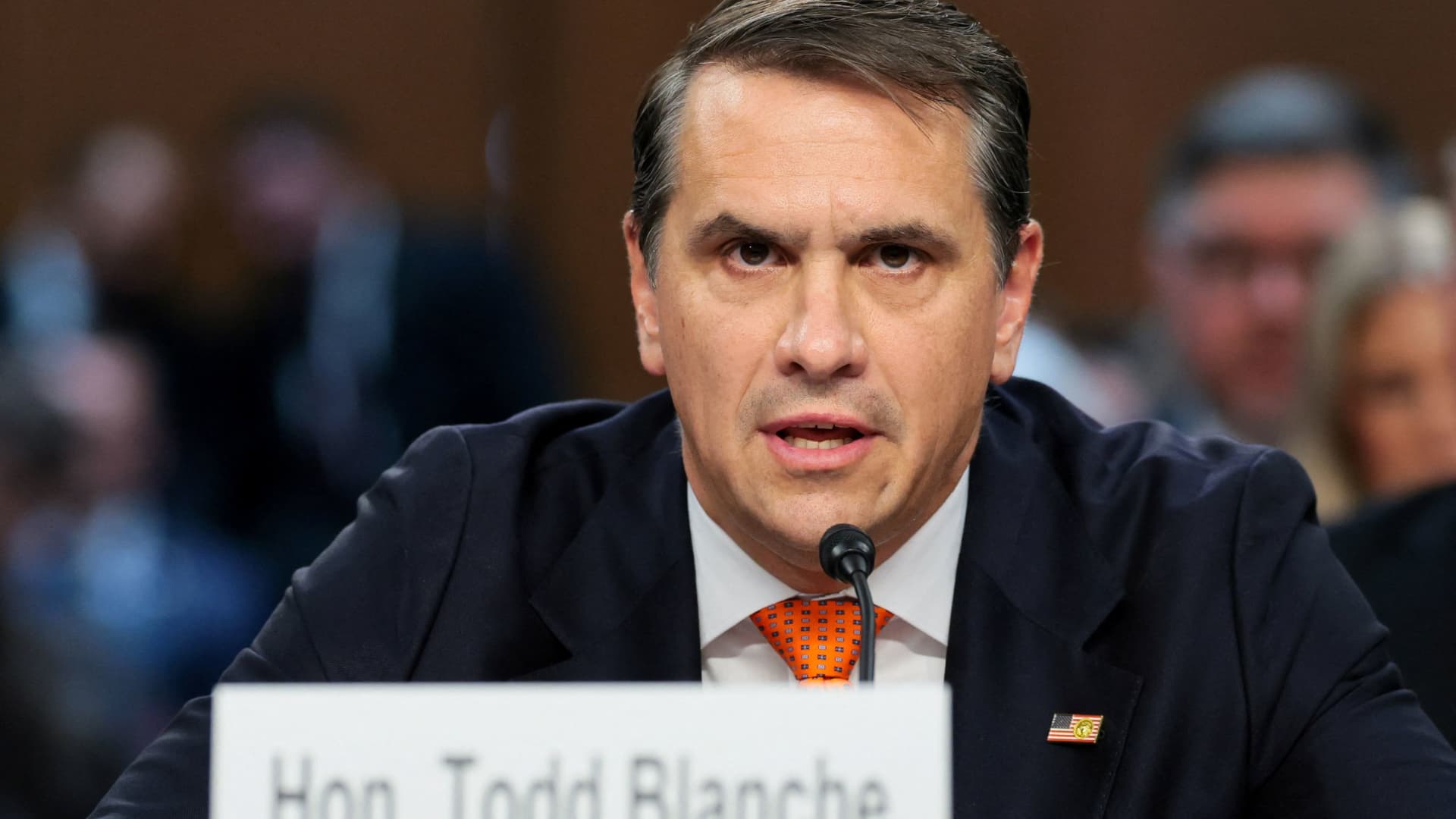
Acting U.S. Attorney General Todd Blanche testified before the Senate Judiciary Committee on July 15, defending the Justice Department’s handling of Jeffrey Epstein records, answering questions about a proposed $1.8 billion fund and disclosures about cryptocurrency holdings.
Acting U.S. Attorney General Todd Blanche told the Senate Judiciary Committee on Wednesday that Department of Justice lawyers and FBI reviewers worked diligently to handle the extensive record review after a law required public disclosure of DOJ files related to Jeffrey Epstein. Blanche, nominated by President Donald Trump to be attorney general, defended the department’s process while acknowledging errors in redactions that exposed some victims’ personal information.
Strong lede — what happened and why it matters
Blanche testified about the DOJ’s phased release of millions of pages tied to Epstein and said the department faced a “Herculean task” reviewing potentially responsive documents. He said some materials were withheld because they were not responsive to the statute — for example, documents pertaining to a different person named Epstein — and because certain legal privileges and duplicates applied. Blanche accepted responsibility for mistakes in redactions and said the department moved to remove and correct documents once errors were discovered.
Key issues raised at the hearing
- Epstein records and redactions: Blanche said roughly 1% of redactions required post-release fixes. He emphasized that qualified DOJ and FBI attorneys conducted the reviews and that the department acted to remove and fix improperly unredacted victim names as soon as they were identified.
- Cryptocurrency holdings and enforcement decisions: Sen. Dick Durbin pressed Blanche over his prior cryptocurrency holdings and potential conflicts after Blanche issued an order that dismantled the DOJ’s crypto enforcement team and halted ongoing crypto investigations last year. Durbin said Blanche had roughly $160,000 in crypto and was advised to divest, and he questioned transfers of those assets within Blanche’s family while regulatory decisions were being made.
- The canceled $1.8 billion “anti‑weaponization” fund: Blanche testified about a proposed $1.8 billion compensation fund tied to an out-of-court settlement in a suit filed by President Trump against the IRS. Blanche said he canceled plans for the fund after criticism from both Republican and Democratic senators; President Trump has suggested reviving the idea. The settlement also included provisions that the DOJ said would shield Trump-related taxpayers from audits or enforcement through the settlement date.
Market and legal context provided at the hearing
Senators referenced a recent Miami federal judge’s order that criticized Trump’s lawsuit against the IRS as brought for an “improper purpose” and directed the judge’s scathing order to be forwarded to the New York State Bar Association. That judge found the settlement lacked a viable legal or factual basis. The judge’s order is part of the backdrop senators cited in questioning Blanche about ethics and the DOJ’s role in settlements and enforcement.
Durbin’s objections and ethics questions
Sen. Durbin, the top Democrat on the Judiciary Committee, recounted a private meeting with Blanche in which the nominee acknowledged making a mistake and said he did not want the weaponization fund to move forward. Durbin said Blanche declined to put that commitment in writing during their meeting. Durbin said Blanche’s handling of crypto-related matters amid asset transfers to family members “sounds like, on its face, to be a conflict of interest.”
Victims’ reaction and redaction errors
A coalition of Epstein victims released a video urging the Senate to block Blanche’s confirmation, saying the DOJ’s release had exposed personal information that should have been redacted. Blanche responded that the department’s reviewers applied appropriate redactions, but mistakes occurred and were corrected when found.
What’s next
The Senate Judiciary Committee hearing put Blanche’s actions and judgments under close scrutiny as senators from both parties probed the implications for DOJ independence, ethics, and enforcement priorities. Blanche’s nomination faces Democratic opposition centered on conflict-of-interest concerns and Republican scrutiny focused on prosecutorial priorities and prior DOJ decisions.
Key Quotes
“We worked hard, hardworking lawyers within the department, to do the right thing, and we will continue to do so,” Blanche said in response to questioning from committee Chairman Chuck Grassley.
Bottom Line for Traders
This hearing centers on legal and institutional risk rather than market-sensitive corporate disclosures. The confirmation process and attendant ethics questions could influence perceptions of DOJ policy continuity, enforcement priorities in areas such as cryptocurrency, and political risk around high-profile settlements. Traders and investors should note the developments as part of broader governance and regulatory-risk monitoring, but the source does not provide market moves, prices, or trading guidance.