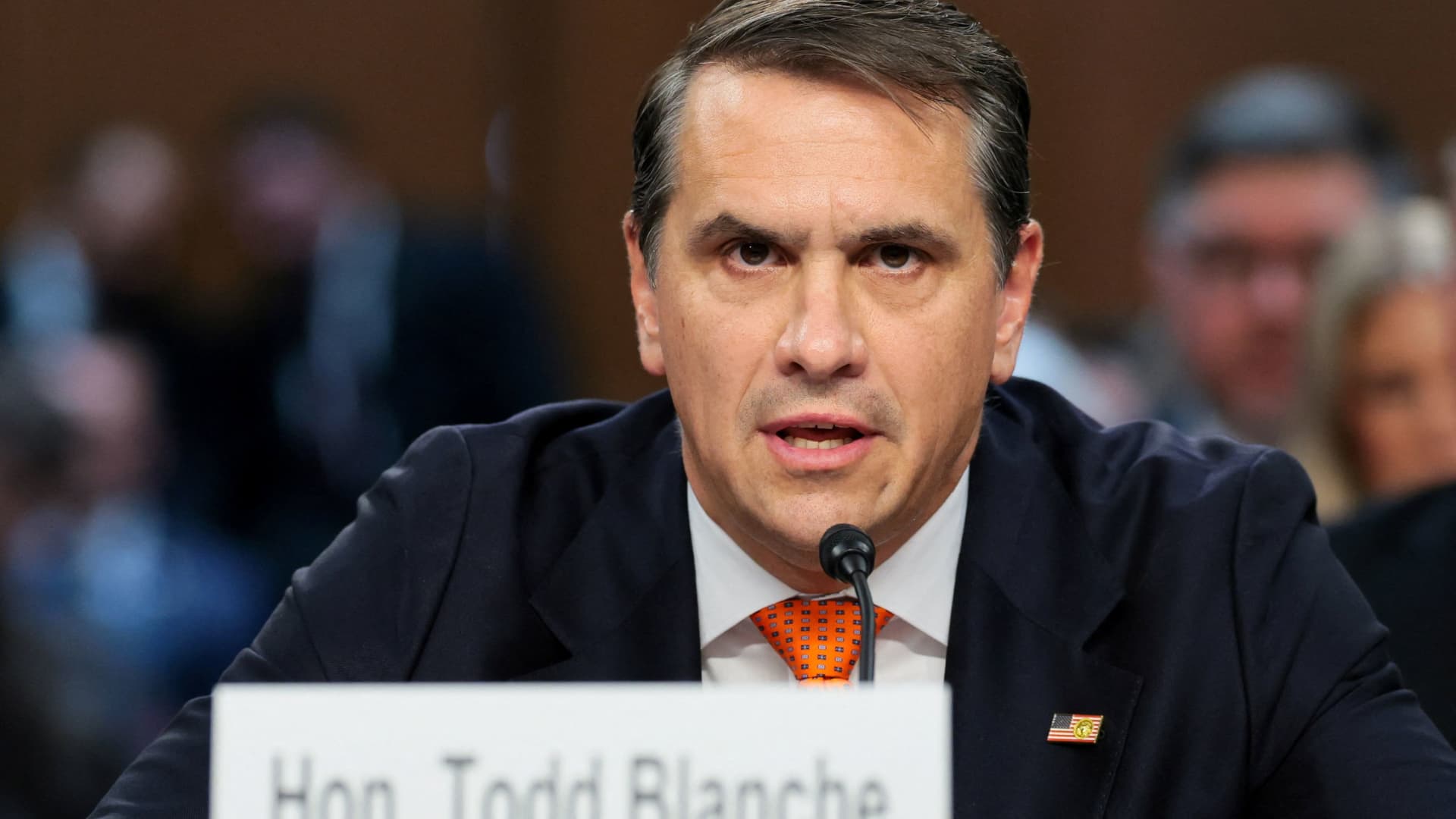
Acting Attorney General Todd Blanche told the Senate Judiciary Committee the Justice Department reviewed “millions” of Epstein records and corrected redaction errors, while senators questioned his crypto holdings and a canceled $1.8 billion fund tied to a Trump settlement.
Acting U.S. Attorney General Todd Blanche testified before the Senate Judiciary Committee on July 15, 2026, defending the Justice Department’s processing and release of records related to the late sex offender Jeffrey Epstein as part of his confirmation hearing to become U.S. attorney general. Blanche said DOJ lawyers and FBI reviewers worked through a “Herculean task” to identify responsive documents and apply redactions, acknowledging some mistakes were later fixed.
Introduction
Blanche, who became acting attorney general in early April after President Donald Trump fired Pam Bondi, faced sustained questioning about the DOJ’s decision in January to withhold additional Epstein-related material after releasing more than 3 million pages. He told senators some withheld files were not responsive to the law requiring public disclosure and included records tied to a separate matter involving another person named Epstein.
Market Reaction
(This section is not applicable — the source does not report market or price-action data.)
Why It Matters
The handling and redaction of the Epstein files, and subsequent release of personal information of victims, have become central issues in Blanche’s confirmation. A group of Epstein victims released a video urging senators to oppose Blanche’s nomination, citing the exposure of personal data that should have been redacted. Blanche said DOJ removed and corrected improperly unredacted documents as soon as they were identified, and estimated about 1% of redactions required correction after the release.
Context & Background
Blanche served as deputy attorney general when the department initially disclosed more than 3 million pages and later decided not to release millions more pages. In a Jan. 30 DOJ statement, officials said withheld documents included duplicates and materials withheld under legal privileges. Blanche reiterated that qualified DOJ and FBI attorneys carried out the review and applied redactions.
Leadership / Corporate Governance
Blanche drew national attention previously as a criminal defense lawyer for Donald Trump. After Bondi’s firing in April over her handling of DOJ documents related to Epstein, Trump elevated Blanche to acting attorney general and later nominated him for the permanent role. Trump publicly lauded Blanche in a Truth Social post, urging Republican senators to confirm him.
Ethics, Fund Controversy and Judicial Criticism
Senators pressed Blanche about a proposed $1.8 billion “anti-weaponization” fund he had announced and later canceled amid bipartisan criticism. Blanche said he canceled the fund; the proposal had been tied to an out-of-court settlement of a lawsuit Trump filed against the IRS concerning leaked tax records. That settlement also included provisions giving Trump and related parties immunity from audits, prosecution or enforcement for tax returns filed up to the settlement date, a point that has drawn judicial scrutiny. A Miami federal judge issued a sharply worded order calling Trump’s suit an “improper purpose” and directed that the order be sent to the New York State Bar Association, which is considering an ethics complaint involving Blanche.
Cryptocurrency Holdings and Conflict Concerns
Sen. Dick Durbin (D-Ill.), the Judiciary Committee’s top Democrat, raised concerns that Blanche held cryptocurrency last year while the DOJ restructured crypto enforcement. Durbin said Blanche told him he had roughly $160,000 in cryptocurrency, was advised to divest, and transferred holdings to family members during the vetting process. Durbin characterized Blanche’s explanation as a “weak defense,” saying the timing raised potential conflict-of-interest questions because the department issued orders that reduced government scrutiny of the crypto sector during the period Blanche was transferring assets.
Prosecutions and Oversight Questions
Democrats at the hearing flagged past federal prosecutions of individuals President Trump has described as enemies — including cases lodged by the U.S. Attorney’s Office for the Eastern District of Virginia that were later dismissed after a judge found the interim U.S. attorney was invalidly appointed. Blanche was questioned about DOJ oversight of such prosecutions and whether his leadership would politicize enforcement decisions.
Key Quotes
- On the Epstein files: “We worked hard, hardworking lawyers within the department, to do the right thing, and we will continue to do so,” Blanche said in response to questioning from Senate Judiciary Chairman Chuck Grassley (R-Iowa).
- On redactions: “There were mistakes that were made, and so approximately 1% of the redactions had to be fixed after we released the Epstein files… Whenever we learned that any victim’s name had been improperly not redacted, we immediately took the document down and fixed it as soon as we could,” Blanche said.
What’s Next
The Senate Judiciary Committee hearing continues to examine Blanche’s nomination, focusing on the Epstein document release, the canceled fund, his past representation of Trump, and potential conflicts tied to cryptocurrency holdings. Senators are also considering broader questions about DOJ independence and the department’s enforcement priorities under Blanche’s leadership.
Bottom Line for Traders
This nomination hearing centers on legal, ethical and governance issues rather than market-moving policy. The confirmation outcome may affect perceptions of DOJ independence and regulatory enforcement posture, which traders and investors monitor for potential implications to legal and regulatory risk across sectors, including financial services and cryptocurrency—though the source does not link Blanche’s hearing to specific market moves.