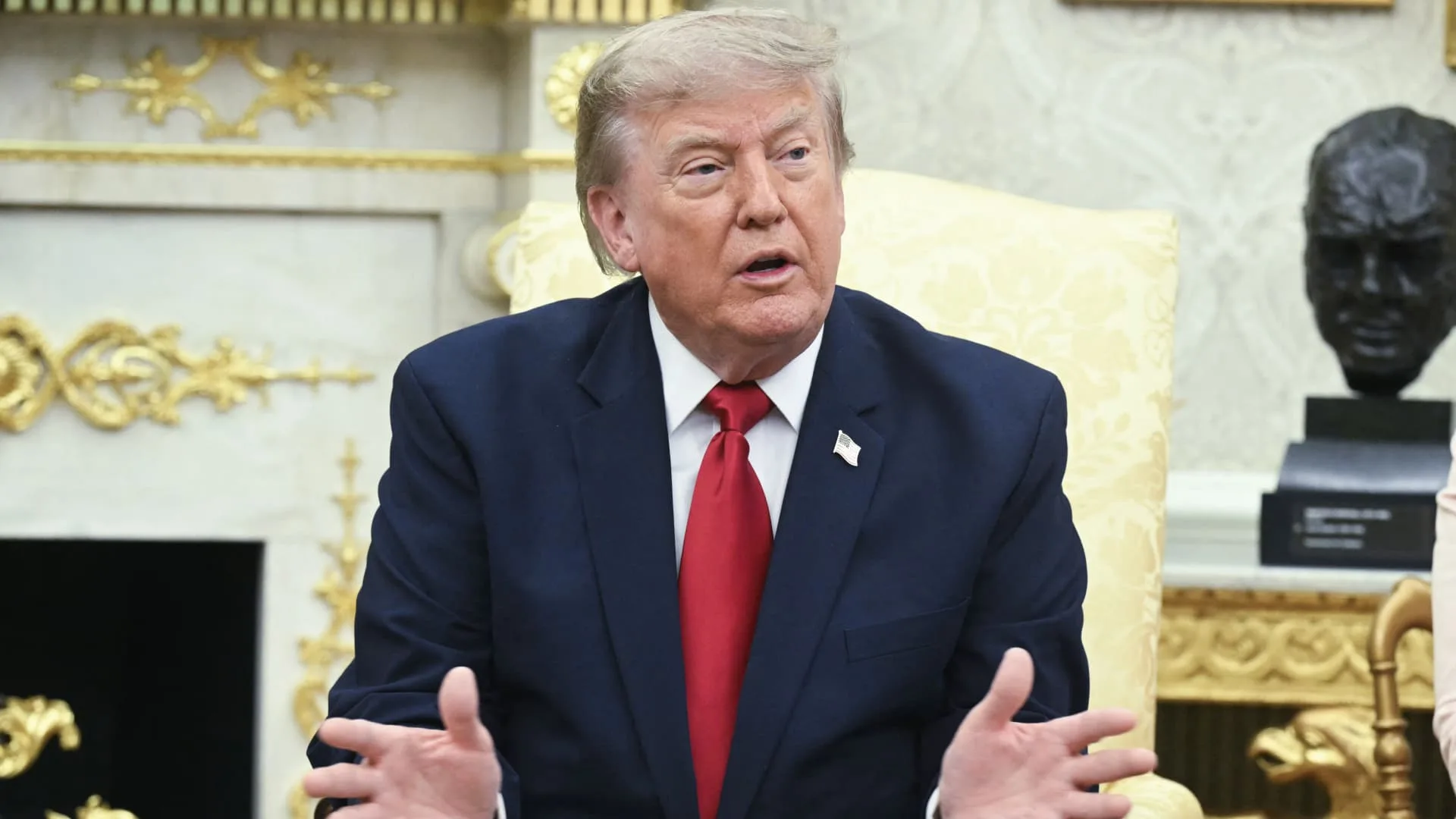
President Trump said Iran “wants to meet” even as U.S. Central Command announced a second round of strikes targeting Iranian military capabilities near the Strait of Hormuz; analysts warn the conflict risks becoming prolonged.
U.S. President Donald Trump on Wednesday said Iran has indicated a willingness to meet for talks, while U.S. forces carried out a second wave of strikes on Iranian targets within 12 hours, CENTCOM said. The developments come amid heightened tensions over attacks on commercial shipping and a mounting U.S.-Iran tit-for-tat that analysts say could become a long, low‑level conflict.
What Happened
- CENTCOM said an earlier wave of strikes occurred around 6 a.m. ET and ended at 7:30 a.m. ET. Those strikes used precision munitions against Iran’s coastal defense systems and cruise-missile storage and launch sites on Greater Tunb Island in the Persian Gulf near the Strait of Hormuz.
- The second wave was announced later in the day as President Trump continued public warnings that U.S. strikes would intensify if diplomacy failed.
- Trump told Fox Business he received word Iran “wants to meet” and insisted Tehran “always want[s] to meet” while continuing to threaten intensified military pressure.
Market Reaction
Oil prices moved higher amid renewed concerns over safe passage through the Strait of Hormuz, with front-month Brent futures holding above $85 per barrel as reported in the source. Shipping and insurance costs and wider energy market uncertainty were cited as ongoing risks.
Iran’s Public Position
Iranian leaders signaled a readiness to keep fighting while acknowledging diplomacy remains an instrument. Mohammad Bagher Ghalibaf, Iran’s parliamentary speaker, said the country has “never welcomed war” but must remain prepared for battle and also use diplomacy and negotiation to secure national interests, according to translated state media remarks.
Why It Matters
The strikes and public threats target Iranian military systems that the U.S. says threaten commercial vessels in a critical maritime chokepoint for global oil flows. The Strait of Hormuz is central to energy markets; disruptions there ripple to shipping routes, insurance costs, and oil prices.
Analysts quoted in the source warn the conflict lacks a clear exit strategy and may evolve into a prolonged confrontation that neither side can quickly resolve without painful concessions.
Analyst Views and Risks
Mike Rosenberg of IESE Business School said the Islamabad Memorandum signed June 14 was unrealistic and that both sides still seek outcomes that allow them to claim victory, making a negotiated settlement unlikely in the near term. He suggested a negotiated, Pakistan-brokered ceasefire without nuclear guarantees is possible but politically difficult for the U.S. administration to accept before forthcoming elections.
Andreas Böhm of the University of St. Gallen described the situation as “tricky” and warned the conflict could become a protracted, low‑level war. He argued that without a clear U.S. strategy, targeting Iranian infrastructure at scale could provoke retaliatory attacks on Gulf energy systems and would be politically hard to justify domestically.
Context & Background
The strikes come after a recent round of U.S. attacks in retaliation for assaults on commercial ships transiting the Strait of Hormuz. Trump has publicly warned that military pressure will escalate and earlier this week floated — then backed away from — a proposal to impose a 20% toll on cargo transiting the Strait, later saying Gulf states would repay via investment in the U.S.
The source noted that Trump has repeatedly asserted Iranian military capabilities have been largely depleted, a claim he has made in prior public statements.
Key Quotes
- Trump: “We received a call just as I was coming here that they want to meet… They always want to meet… They’re nasty people, but they want to make a deal.”
- CENTCOM (X post): described the strikes as “targeting Iranian military capabilities used to threaten vessels freely transiting through the Strait of Hormuz.”
- Mohammad Bagher Ghalibaf: “We have never welcomed war… we must always be prepared for battle… we must also use the tools of diplomacy and negotiation to achieve and solidify our national interests.” (translated, reported in Iranian state media)
What’s Next
The source reports Trump warning that next week U.S. forces would target Iranian infrastructure including power plants and bridges if Tehran does not come to the negotiating table. Military actions, diplomatic outreach, and regional responses are likely to shape near-term developments; the article contains no official timeline for further operations.
Bottom Line for Traders
The strikes and public statements increase geopolitical risk tied to the Gulf and energy markets. Traders and investors monitoring energy, shipping, and defense sectors should factor in continued uncertainty around safe transit in the Strait of Hormuz and potential for further supply‑side shocks, per the source. This section refrains from investment advice and only summarizes the market significance reported.