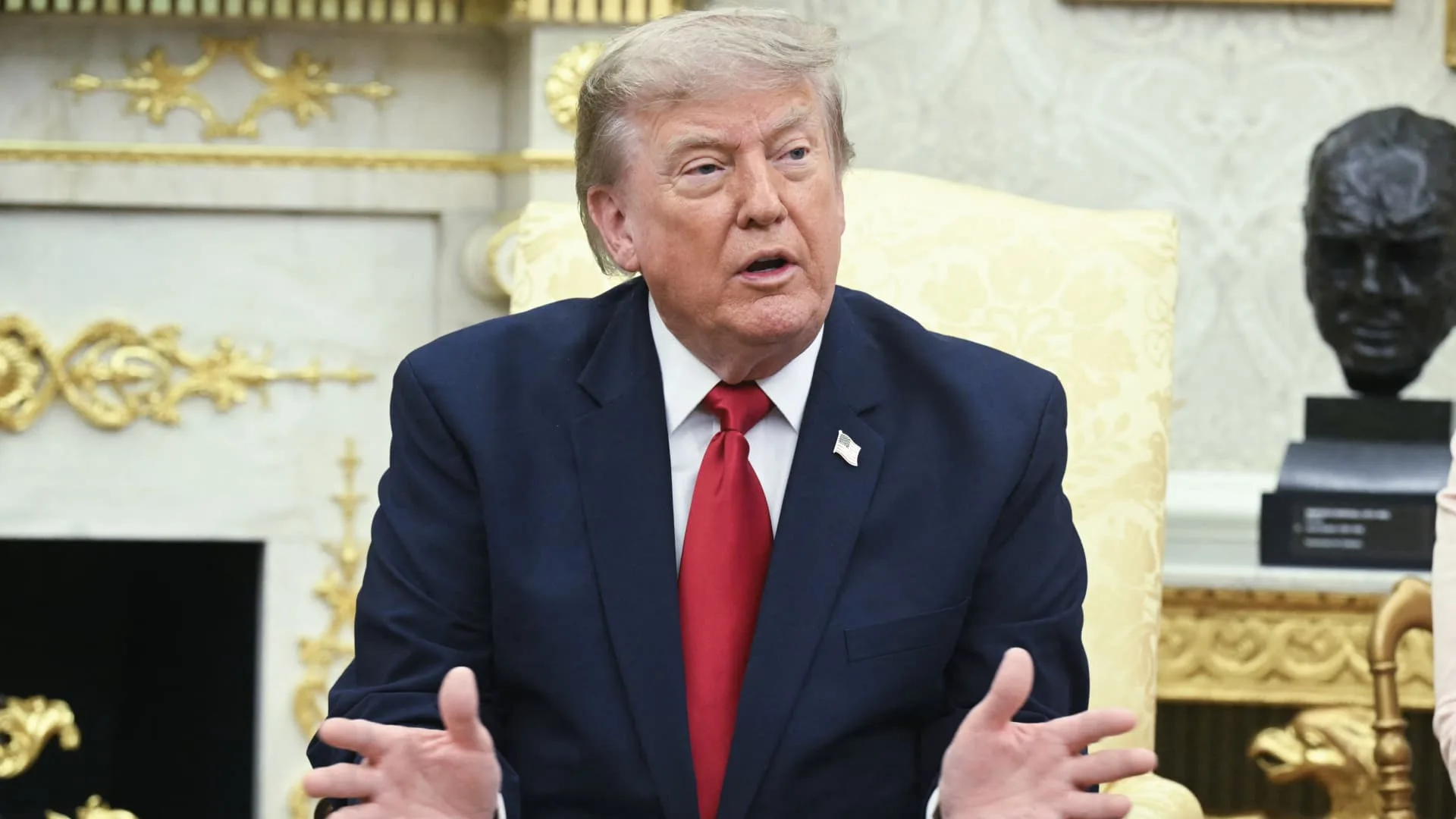
President Donald Trump said Iran sought talks as U.S. Central Command reported a second wave of strikes in 12 hours targeting Iranian military capabilities used to threaten shipping through the Strait of Hormuz.
U.S. forces conducted a second round of strikes against Iranian targets on Wednesday as President Donald Trump said Tehran has expressed interest in meeting to negotiate — comments coming amid renewed hostilities that analysts warn could harden into a prolonged conflict.
Market Reaction
Energy markets showed sensitivity to the escalation. Brent crude futures remained above $85 a barrel amid lingering concerns about safe transit through the Strait of Hormuz, a major oil shipping route. Shipping-industry officials said the shifting messages from Washington have increased uncertainty for maritime operators.
Why it matters
The strikes and public threats raise the risk of a longer, low‑intensity conflict between Washington and Tehran. The Strait of Hormuz is a critical chokepoint for global energy supplies; disruptions, or the threat thereof, can push oil prices higher and raise insurance and transport costs for shipping firms. Analysts warn that absent clear diplomatic progress, cycles of retaliation could prolong instability in the region.
Iran’s posture and diplomatic signals
Iran maintained a combative public stance while also signalling the possibility of diplomacy. Parliamentary speaker Mohammad Bagher Ghalibaf was quoted in state media saying Iran “have never welcomed war” but must “always be prepared for battle” and should “use the tools of diplomacy and negotiation to achieve and solidify our national interests.”
U.S. messaging and threatened targets
Trump said U.S. forces would step up pressure if Tehran did not negotiate. He warned in recent comments that the U.S. could target Iranian infrastructure next week, naming power plants and bridges as potential targets “unless they get to the table and negotiate.” Earlier in the week he floated, then abandoned, a 20% toll on cargo transiting the Strait of Hormuz, saying Gulf states would instead invest in the U.S. as repayment.
Analyst assessments: risk of a drawn-out conflict
Commentators cited by the source described limited prospects for a near-term settlement. Mike Rosenberg, a management professor at IESE Business School, said the Islamabad Memorandum signed by Trump on June 14 was “unrealistic” and argued that both sides’ desire to claim victory makes a positive outcome unlikely soon. Rosenberg suggested a negotiated, narrow ceasefire brokered by Pakistan is the plausible but politically difficult route.
Andreas Böhm of the University of St. Gallen warned the situation risks becoming a “yearslong” low-level conflict. He told CNBC that the administration “started the war without a goal,” making strategy and exit routes unclear. Böhm added that broader U.S. strikes on Iranian infrastructure would likely prompt retaliatory attacks on energy assets in the Gulf region.
Context & Background
CENTCOM has carried out multiple rounds of strikes in recent days in response to attacks on commercial vessels transiting the Strait of Hormuz. Tehran has responded with strikes against multiple Gulf countries, and officials from both sides have alternated between combative rhetoric and limited diplomatic outreach. The fragile ceasefire agreed last month has frayed, and Trump has said the ceasefire was “over.”
Key Quotes
- President Donald Trump: “They always want to meet…they want to make a deal.” (Fox Business interview)
- CENTCOM (X post): At 3 p.m. ET, forces “launched operations for a second wave of strikes today against Iran” targeting capabilities “used to threaten vessels freely transiting through the Strait of Hormuz.”
- Mohammad Bagher Ghalibaf (translated, Iranian state media): “We have never welcomed war…but we must always be prepared for battle” and “we must also use the tools of diplomacy and negotiation.”
Bottom Line for Traders
The source indicates heightened geopolitical risk centered on the Strait of Hormuz. Traders and market participants should note increased uncertainty around oil shipments and regional security. The reporting ties the U.S. strikes and Iranian responses directly to risks for energy supply routes, which the market has already reflected in oil benchmarks referenced by the source.