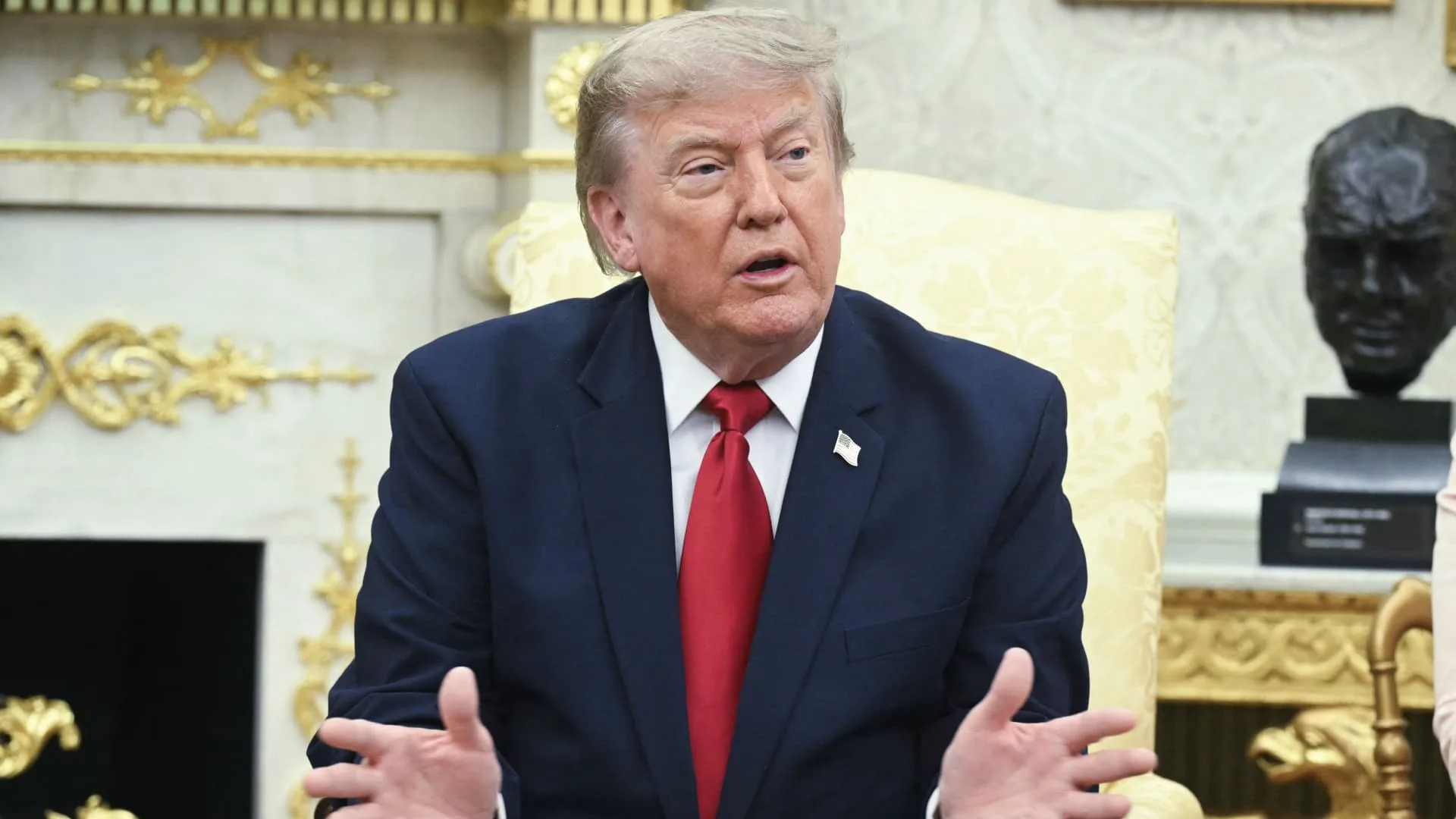
President Donald Trump said Iran wants to meet for talks even as U.S. forces conducted a second wave of strikes, and Trump warned of targeting Iranian infrastructure — including power plants — if diplomacy fails.
President Donald Trump told Fox Business on Wednesday that Iran “wants to meet” even as U.S. Central Command said American forces carried out a second round of strikes against Iranian military targets within 12 hours. The U.S. said the operations targeted capabilities used to threaten vessels transiting the Strait of Hormuz; Trump separately said next week’s strikes could expand to Iranian power plants and bridges if Tehran does not negotiate.
Market Reaction
Oil markets reacted to the escalation: CNBC reported front-month Brent crude futures remained above the $85-per-barrel level, reflecting concerns about safe passage through the Strait of Hormuz.
Shipping and logistics groups signaled heightened uncertainty. Jakob Larsen of BIMCO said shifting messages from policymakers “adds to the confusion” and increases risk and costs for the industry.
What Happened — Timeline and Targets
CENTCOM announced a second wave of strikes at 3 p.m. ET “targeting Iranian military capabilities used to threaten vessels freely transiting through the Strait of Hormuz.”
Earlier the same day, U.S. forces carried out a prior strike that began around 6 a.m. ET and ended at about 7:30 a.m. ET. CENTCOM said precision munitions struck Iran’s coastal defense systems and cruise missile storage and launch sites on Greater Tunb Island, a Persian Gulf island near the Strait of Hormuz.
Iran’s Public Position
Iranian officials have publicly framed their stance as prepared for continued fighting while remaining rhetorically open to diplomacy. Parliamentary speaker Mohammad Bagher Ghalibaf said, as reported in Iranian state media, “We have never welcomed war, and we will not, but we must always be prepared for battle” and that Iran must “use the tools of diplomacy and negotiation to achieve and solidify our national interests.”
Why It Matters
The strikes focus on sites tied to threats against commercial shipping in one of the world’s most important oil transit chokepoints. Disruption or retaliation in the Strait of Hormuz has immediate implications for global oil logistics and shipping costs.
Policy signals from the White House, including Trump’s threat to target infrastructure such as power plants and bridges, raise the prospect of a widening campaign that analysts say could prolong conflict and complicate diplomatic options.
War Escalates — Political and Strategic Context
CENTCOM has conducted multiple strikes in recent days; Tehran has simultaneously carried out attacks on Gulf countries, according to the source reporting.
Trump told Fox News the campaign would intensify absent a diplomatic breakthrough: “We’re going to hit them very hard tonight… We’re going to hit them hard tomorrow night… Next week it gets really bad for them because next week comes the power plants, next week comes the bridges.”
Expert Views — Risk of a Protracted Conflict
Mike Rosenberg, management professor at IESE Business School, said current actions leave little prospect for a rapid settlement. He described the Islamabad Memorandum signed June 14 as “unrealistic” and suggested a negotiated ceasefire brokered by a third party may be the likely endgame, while cautioning political constraints on the U.S. side.
Andreas Böhm, University of St. Gallen lecturer, warned the conflict risks becoming a “long-time low-level conflict” and said the administration lacks a clear strategy to achieve stated goals without triggering broader regional retaliation, particularly to Gulf energy infrastructure.
Key Quotes
Donald Trump (Fox Business): “They want to meet… They’re nasty people, but they want to make a deal.”
Donald Trump (Fox News): “Next week it gets really bad for them because next week comes the power plants. Next week comes the bridges.”
Mohammad Bagher Ghalibaf (Iranian state media): “We have never welcomed war, and we will not, but we must always be prepared for battle… we must also use the tools of diplomacy and negotiation.”
Bottom Line for Traders
The strikes and public threats heighten geopolitical risk premiums for energy and shipping sectors. With Brent futures reported above $85 per barrel, traders and market participants face continued volatility tied to developments around the Strait of Hormuz and to policy pronouncements from both Washington and Tehran.
What’s Next
CENTCOM and the White House statements indicate additional operations may continue in the near term if diplomacy does not advance. Iran’s public posture signals readiness to continue combat while leaving diplomatic channels nominally open. How those concurrent signals translate into further strikes, retaliatory action, or a negotiated pause remains unresolved in the source material.