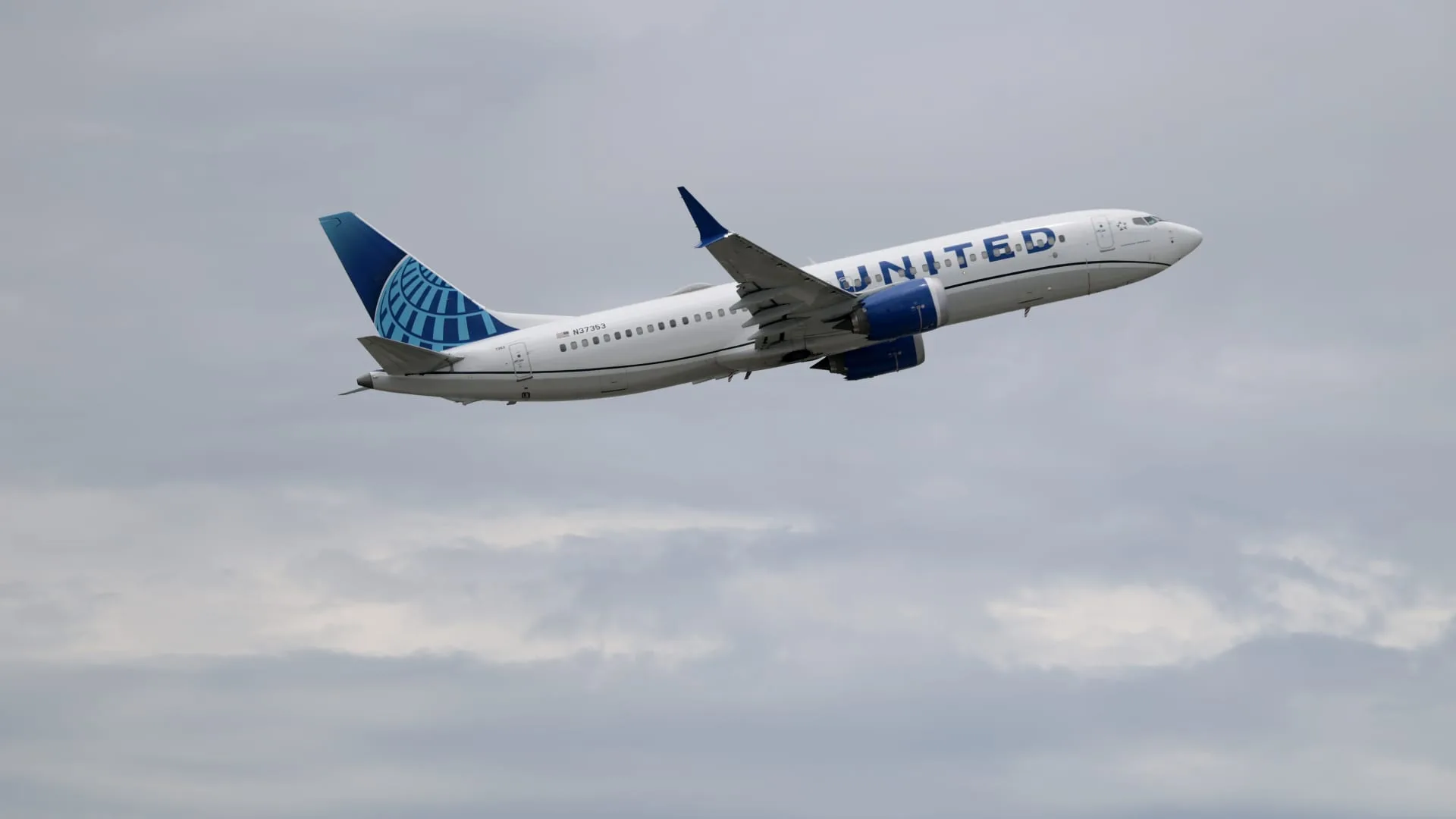
United Airlines reported second-quarter results that beat Wall Street forecasts on July 15, 2026, but warned sharply higher jet fuel will subtract billions from 2026 profits and could force capacity cuts.
United Airlines (UAL) said Wednesday its second-quarter adjusted earnings per share exceeded analyst estimates, but volatile jet fuel prices are set to add nearly $6 billion to the carrier’s 2026 operating costs versus its original outlook — a headwind that narrows full-year profitability even as demand and fares remain elevated.
Key results for the quarter ended June 30
- Adjusted earnings per share: $1.99 vs. $1.88 expected
- Revenue: $17.67 billion vs. $17.61 billion expected
- Net income: $805 million, down more than 17% year-over-year ($2.46 per share)
- Adjusted net income: $649 million, or $1.99 per share
Outlook and fuel impact
United updated guidance to reflect recent fuel-price volatility. The airline now sees third-quarter adjusted EPS of $2.50 to $3.50 (analysts had expected about $3.60). It reaffirmed full-year adjusted EPS of $9 to $11, using updated fuel assumptions; that top end narrows the company’s earlier April range and follows a prior cut made after February’s U.S.-Iran clashes.
Using Argus data cited by Airlines for America, United said jet fuel at major U.S. airports rose about 34% so far in July through Tuesday. Based on Tuesday’s fuel levels, United estimates higher prices could add as much as $6 billion to its costs this year compared with expectations at the start of 2026. The carrier said it expects to absorb up to roughly 90% of that added cost in the current quarter and all of it in the fourth quarter.
Capacity and revenue mix
United expanded capacity 3.5% in the second quarter. Consolidated revenue rose 16% year-over-year to $17.67 billion, with total unit revenue up 12.1% from a year earlier — the strongest unit-revenue growth since early 2023, according to FactSet. The company reported higher revenue across premium, corporate and basic-economy fares, and saw unit-revenue gains on both domestic and international routes.
Operational response and competitive context
United signaled it could further trim planned capacity this year if fuel costs remain elevated. Rival Delta Air Lines (DAL) has also begun passing a greater share of higher fuel costs to customers, and both carriers say demand remains resilient despite higher fares.
Earnings call
United executives will discuss results on an earnings call Thursday at 10:30 a.m. ET.
Why It Matters
Higher jet fuel is the largest expense after labor for U.S. carriers. United’s updated guidance and the $6 billion fuel-impact estimate illustrate how short-term geopolitical and commodity-price swings can rapidly erode carrier profitability even amid strong travel demand and fare strength.
Context & Background
United cut its earlier 2026 outlook in April after military actions between the U.S. and Iran affected market expectations. In July, renewed escalation and de-escalation in that geopolitical episode pushed jet-fuel benchmarks sharply higher, prompting the company to reprice guidance again.
What’s Next
Investors will focus on management’s answers to analyst questions on the call, especially: how hedging and contract fuel commitments will mitigate additional downside, whether further capacity cuts are likely, and the pace of premium and corporate demand into late summer and the fall.
Bottom Line for Traders
United delivered a quarter that beat consensus on EPS and revenue while reporting robust unit-revenue growth. Still, the company’s nearly $6 billion fuel-cost adjustment and lower near-term EPS guidance underscore elevated margin risk for the remainder of 2026. Traders should weigh the revenue strength against the larger, near-term cost shock when assessing UAL exposure.
$UAL Live Price, Interactive Charts and Performance Graphs
Market data may be delayed. See StockMarketLoop’s financial disclaimer.
Source: StockMarketLoop