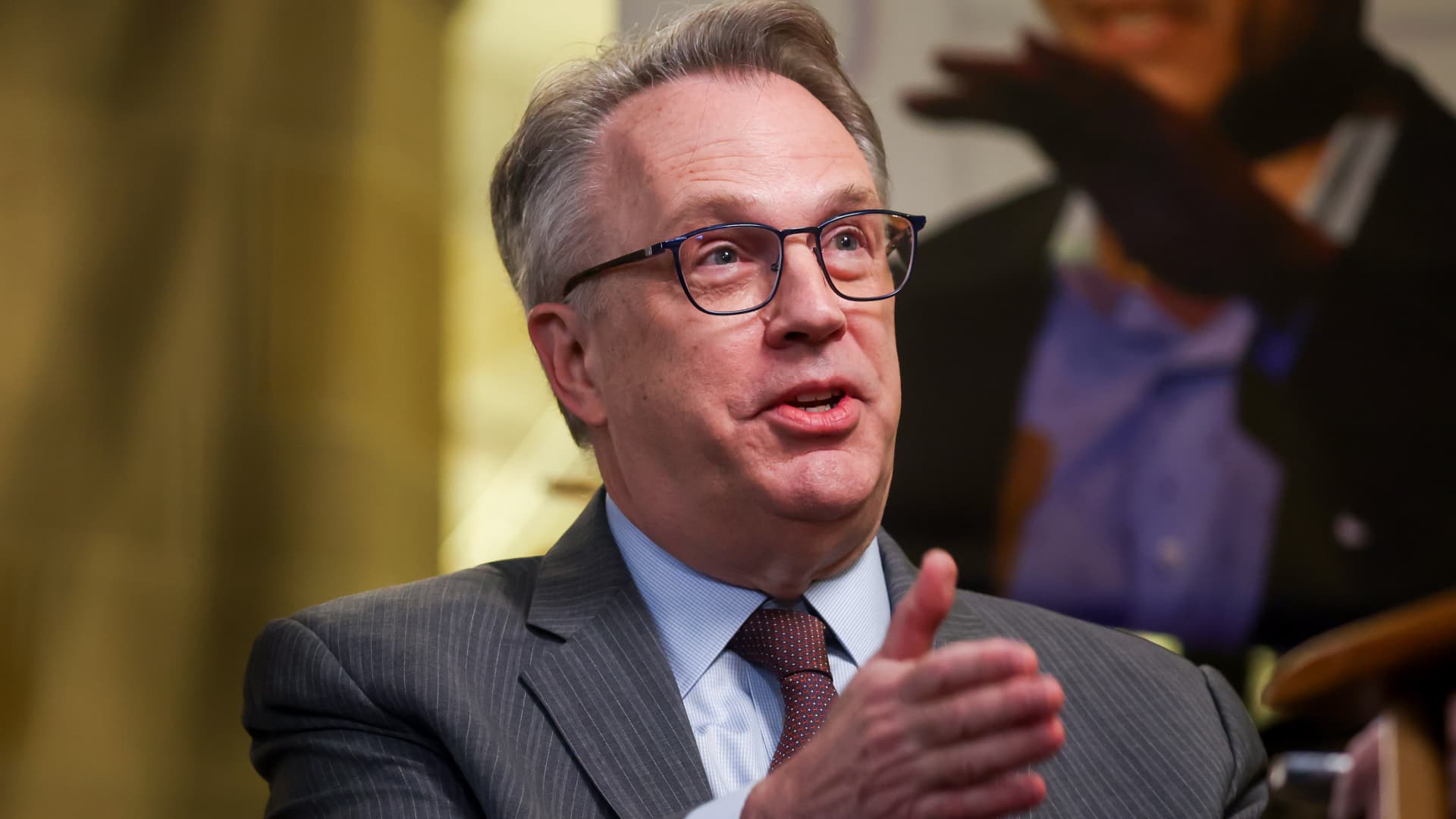
New York Federal Reserve President John Williams told business leaders that multiple indicators show inflation has likely peaked, giving the Fed room to keep the current policy stance even as markets price a potential rate hike later this year.
New York Fed President John Williams said Wednesday that he sees “encouraging reasons to expect that inflation has peaked and should edge down in coming quarters,” signaling that the current stance of monetary policy is “well positioned” to bring inflation back toward the Fed’s 2% goal.
Williams delivered the comments in a speech to business leaders in his home district and listed five reasons he expects the recent surge in prices has run its course. He said he expects “overall inflation to decline to around [3.25%] percent by year-end, then continue on a glide path toward our 2 percent goal in 2027 and land on target in 2028.”
- Williams identified several drivers of this year’s price spike — the war between the U.S. and Israel and Iran, higher oil prices, lingering tariff effects, and elevated technology investment — but said those pressures are easing.
- On tariffs, he said there should not be a “significant additional impulse” because expiring duties are largely being replaced by new ones.
- On energy, Williams said the oil price spike tied to the conflict has “likely peaked and will come down closer to levels seen before” the fighting.
- He noted that artificial intelligence–related investment has contributed to price pressures, but expects related supply imbalances to “recede over time as more supply comes online.”
- Williams also said the labor market is not currently a source of inflation and that inflation expectations remain “well-anchored,” which gives policymakers breathing room.
Market and policy context
Williams’ remarks arrive amid persistent market speculation that the Federal Reserve could still raise interest rates later in the year. Federal Reserve officials on the Federal Open Market Committee (FOMC) in June, by a narrow margin, penciled in one additional quarter-percentage-point increase by year-end. Market pricing also continues to imply a possible September hike.
The comments followed a Bureau of Labor Statistics report showing a 0.4% month-over-month decline in consumer prices in June — the largest one-month drop since April 2020 — which reduced the annual inflation rate to 3.5%. Williams acknowledged that headline inflation remains above target even as he outlined reasons for an expected slowdown.
What Williams said about policy
“Growth in the economy is solid and on trend, and the labor market is likewise solid and stable,” Williams said. “But with inflation running high, it is imperative that we restore it to the Federal Reserve’s 2 percent longer-run goal on a sustained basis. The current stance of monetary policy is well positioned to do that.”
Different Fed voices
The day before Williams’ speech, Fed Chair Kevin Warsh told the House Financial Services Committee that the June price drop did not amount to “mission accomplished.” “That is not my view,” Warsh said, underscoring the Fed’s caution despite recent disinflationary signs.
Why it matters
Williams’ assessment matters for markets and policymakers because it frames inflation dynamics as transitory from several specific shocks rather than driven by broad, persistent overheating. If his outlook proves accurate — that the main impulses have peaked and will fade — it could reduce the urgency for additional tightening. Yet the Fed’s internal projections and market expectations still leave open the possibility of another rate increase.
What’s next
Williams’ outlook puts emphasis on monitoring the waning influence of oil, tariffs, and technology-driven imbalances, along with inflation expectations and labor-market data. Market participants will watch forthcoming economic releases and FOMC communications for confirmation that the drivers Williams cited are indeed moderating.
Key quotes
- “There are encouraging reasons to expect that inflation has peaked and should edge down in coming quarters.” — John Williams
- “I expect overall inflation to decline to around [3.25%] percent by year-end, then continue on a glide path toward our 2 percent goal in 2027 and land on target in 2028.” — John Williams
- “That is not my view.” — Fed Chair Kevin Warsh, on whether recent disinflation is a finished outcome
Bottom Line for Traders
Williams’ remarks offer a cautiously optimistic signal that several recent inflationary shocks may be easing. That could reduce the likelihood of aggressive additional tightening if incoming data confirm the trend, but FOMC guidance and market-implied policy odds still reflect at least one potential rate increase this year. Traders should treat Williams’ outlook as an influential, source-supported Fed view rather than a definitive signal that policy is settled.